
The short answer: probably, if your mouth and health are stable
Most healthy adults who are missing a tooth can be considered for a dental implant. What matters is not your age but the health of your gums, the amount of jawbone you have, and your general health. A dentist needs to examine you and take a 3D scan to say yes for sure.
Also good to know: many people who were told no in the past can become good candidates after a gum treatment or a bone graft. A no today is often a not yet.
The four things a dentist checks
At your consultation, the team looks at four main areas.
- Your gums. Implants need healthy gums around them. Active gum disease is treated first.
- Your jawbone. The implant needs enough bone to hold it. A 3D scan shows how thick and tall the bone is.
- Your general health. Some conditions and medicines change how you heal.
- Your habits. Smoking, vaping and grinding your teeth all affect the odds.
Your gums and your bone
Gum disease is a leading cause of tooth loss, and it can attack an implant as well. Active gum disease is on Cleveland Clinic's list of reasons an implant may not be the best option. The usual plan is simple: treat the gum disease, make sure it is under control, and then place the implant.
That can mean a deeper cleaning, a few follow-up visits and better home care. Our hygienists spend a full hour with you at a cleaning visit, which gives them time to teach you what works.
When a tooth is gone for a while, the bone where it used to sit slowly shrinks. The longer you wait, the less there is. Severe bone loss is another reason Cleveland Clinic lists for implants not being the best option at first.
A bone graft can add bone. The surgeon places bone material where it is thin, and over a few months your own bone grows into it. After that, an implant can often be placed. It adds time, but it can turn a no into a yes. For more, see our guide to bone grafts for implants.
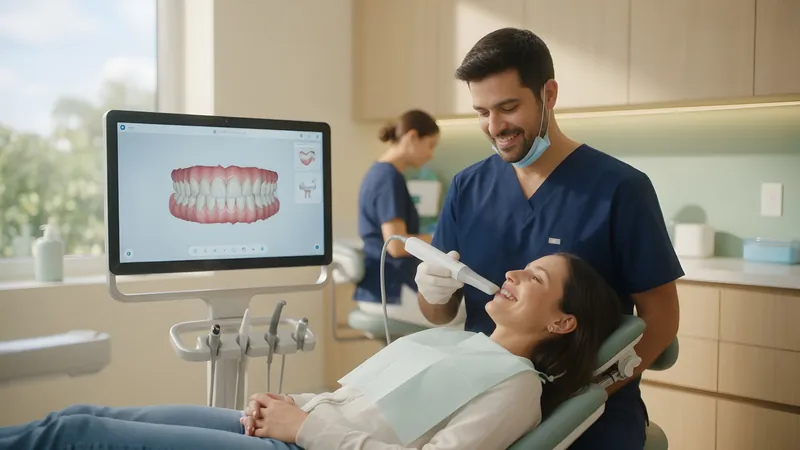
A flat X-ray cannot show this well. A 3D scan, called a CBCT, can. It shows the height and width of the bone and also the nerves and the sinuses so the implant can be planned to avoid them.
Free X-ray, exam and consultation. New Patient Special. New patients only.
The patient and any other person responsible for payment has the right to refuse to pay, cancel payment or be reimbursed for payment for any other service, examination or treatment that is performed as a result of and within 72 hours of responding to any advertisement for the free, discounted fee or reduced fee service, examination or treatment. D0191, C6182
Your health and your habits
Implant surgery is a small surgery, and your body has to heal. The ADA's mouthhealthy.org notes that chronic illnesses like diabetes may interfere with healing. Cleveland Clinic lists bone disorders, some autoimmune diseases and unmanaged diabetes as things that can make implants a poor fit.
Notice the word unmanaged. Many people with diabetes, heart disease or high blood pressure get implants. What matters is that the condition is under control, and that your dentist and your doctor know about it.
Bring a list of your medicines to the visit. Some drugs that treat bone loss, blood clots or cancer can affect surgery. Your dentist may ask to talk to your doctor first. That is a normal step.
Smoking and vaping are the habits that worry dentists the most. Cleveland Clinic says smoking or vaping can disrupt the healing process. One large review that pooled over 150,000 implants found smokers had about 2.4 times the odds of implant failure. We wrote a full guide on this.
Teeth grinding matters too. Grinding puts heavy force on a crown. A night guard can protect your new tooth.
Daily cleaning is the last piece. An implant does not get cavities, but the gum around it can get infected if plaque builds up. If you are willing to brush and clean between the teeth every day, you are already ahead.
Common reasons people think they are not a candidate
These worries come up a lot. Most of them do not end the conversation:
- I am too old. Age alone is not the limit. Health is.
- I have had missing teeth for years. A graft may rebuild the bone.
- I have diabetes. Well-controlled diabetes often does fine.
- I wear dentures. Many implant patients start with dentures.
- I am scared of surgery. Tell us. We can talk about numbing and comfort options.
What a not yet can look like, and your other options
A consultation is a conversation and an exam. We start by asking about your health, your medicines, your goals and any worries. Then we look in your mouth and take digital X-rays and a 3D scan.
Then we sit down with the pictures and show you what we see. You will hear whether implants look like a good fit, what needs to happen first and about how long each step could take. You should also hear your other options, such as a bridge or a denture, in plain words. Nobody should rush you.
Bring your medicine list, any recent lab results if you have diabetes or another condition, and a list of questions. Writing them down helps, because it is easy to forget in the chair.
Sometimes the answer is: not yet. Here is what that might involve, in order:
- Treat gum disease with a deep cleaning and better home care
- Remove a tooth that cannot be saved, and place a graft to protect the bone
- Build up thin bone with a graft and wait for it to heal
- Work with your doctor to bring a health condition under control
- Quit or cut back on smoking for a period around surgery
Your other options if implants are not right for you
Implants are one choice, not the only one. A bridge replaces a tooth by joining crowns on the teeth next to the gap. A partial denture replaces several teeth, and a full denture replaces a whole row. Each has pros and cons, including cost, comfort and how they affect the bone.
Your dentist should lay these out without pressure. The right answer is the one that fits your health, your budget and your life.
Find out at KDA, at no cost to start
The only way to know is to be examined. At KDA we take a 3D scan in our office and explain what we see in plain language, along with your options, the steps and the timing. Dr. Alfredo Calderon has over 15 years of experience in implants.
New patients can call 305-271-1421 for a free implant evaluation. Our office is at 8833 SW 107th Ave in Kendall, open Monday to Friday, 8:00 AM to 5:00 PM. Financing is available, and we accept most dental insurances and most Medicare supplemental plans.
Common questions
Is there an age limit for dental implants?
No set limit. Dentists look at your health, gums and bone, not your birthday.
Can I get an implant with diabetes?
Often, yes, when blood sugar is well controlled. Tell your dentist and your doctor so they can plan together.
What if I do not have enough bone?
A bone graft can add bone first. A 3D scan shows how much you have.
Can I get an implant if I have gum disease?
Usually after the gum disease is treated and under control.
How do I find out if I am a candidate?
Book an exam with a 3D scan. The dentist can tell you what is possible and what to do first.
This article is general information, not medical advice. Your dentist will confirm what is right for you at your exam. General information checked against: my.clevelandclinic.org, mouthhealthy.org.