
What a bone graft for an implant is
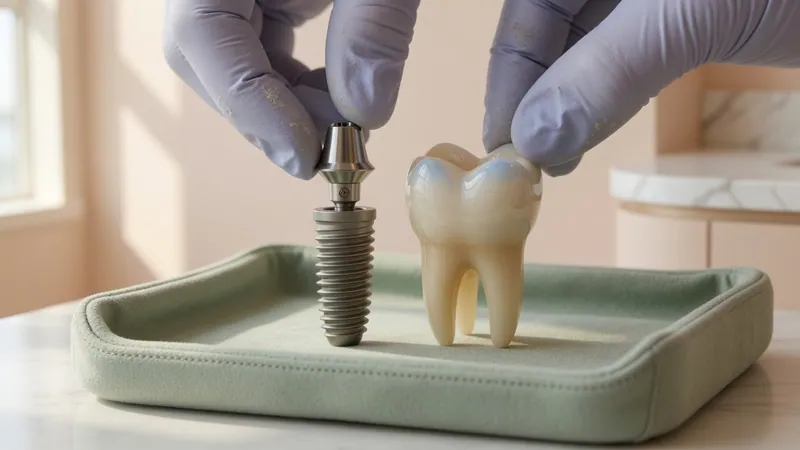
A bone graft adds bone to your jaw so an implant has something solid to grip. If the bone where you need the implant is too thin or too short, a graft builds it back up. Over a few months your own bone grows into the graft material and makes it part of your jaw.
Hearing that you need a graft can feel like bad news. It is usually not. It is a common step, and it can turn a not-enough-bone situation into a good plan.
Why you might need one, and how your dentist knows
Bone needs a job to stay strong. Once a tooth is gone, the bone that held its root slowly shrinks away. The longer the gap is there, the more bone is lost.
Other things can cause bone loss too:
Gum disease that has damaged the bone around teeth; Wearing a loose denture for many years; An infection, a injury or a tooth that was pulled long ago; Smoking, which can affect bone and healing; In the upper back jaw, a sinus (air space) that sits close to the ridge.
A flat X-ray does not show how thick your bone is. A 3D scan, called a CBCT, does. It shows the height and width of the ridge, plus where the nerves and sinuses are. We take this scan in our office.
With that picture, the dentist can plan the implant and see right away if the bone is enough. If it is not, we show you where it is thin and what the graft would do.
The main types of bone graft material
The material comes from one of four places:
- Your own bone (autograft), often taken from another spot in your mouth or from the chin or hip. It is considered the gold standard because it carries your own living cells.
- Donor human bone (allograft), which is processed and screened for safety
- Animal bone (xenograft), also processed
- Man-made material (synthetic), made to work with your body
Common kinds of graft procedures
The type of graft depends on where the bone is missing.
A socket preservation graft is placed right after a tooth is taken out. It fills the empty socket so the ridge does not shrink as much. If you know a tooth has to come out and you plan an implant, ask about this.
A ridge augmentation builds up the width or height of the jaw where it has thinned out.
A sinus lift adds bone below the sinus in the upper back jaw, where the bone is often thin.
A block graft uses a larger piece of bone, often from your own body, for bigger gaps. The Cambridge University Hospitals patient guide notes that after a hip graft you would rest for about four weeks and the hip bone regrows over about three months.
Free X-ray, exam and consultation. New Patient Special. New patients only.
The patient and any other person responsible for payment has the right to refuse to pay, cancel payment or be reimbursed for payment for any other service, examination or treatment that is performed as a result of and within 72 hours of responding to any advertisement for the free, discounted fee or reduced fee service, examination or treatment. D0191, C6182
How long does a bone graft take to heal?
The wait depends on the size and type of the graft. The Cambridge University Hospitals guide says that if you need more extensive grafting, it is done at least four months before the implant, and the grafts are healed after about four to six months. Small grafts can sometimes be done at the same visit as the implant.
After the implant goes in, the jaw needs another stretch to fuse to it. Cleveland Clinic puts that at about three to nine months. So a graft plus an implant can stretch the whole plan across many months. Your dentist should give you a timeline you can see.
It sounds like a long wait. The upside is that you start the implant with a stronger base, which gives it better odds in the long run.
Risks, comfort and what recovery feels like
Grafts are done with numbing, and some people also choose sedation. Afterward you can expect swelling, mild soreness and some bruising for several days, much like after an extraction. Soft foods help, and your dentist will tell you how to rinse and when to come back.
Every surgery has risks. These include infection, loss of part of the graft, and, rarely, numbness or tingling near a nerve. The Cambridge guide says the risk of failure varies and is higher in some people, especially smokers. A large review of 150,000 implants found smokers had about 2.4 times the odds of implant failure, so quitting before and after a graft makes sense.
Call your dentist if swelling or pain keeps getting worse after the first few days, if you have a fever, or if you see pus.
What life looks like between the graft and the implant
The months between the graft and the implant can feel like a pause. They are not wasted time. Your body is building bone, and that bone is what your future implant will stand on.
During this stretch, you can often wear a temporary tooth or your current denture, if it is adjusted so it does not press on the graft. Your dentist may ask you to avoid chewing on that side for a while. Keep up with your cleaning, go to your follow-up visits and tell us right away if the area swells again or feels off.
A follow-up scan before the implant checks that the graft took. If it did, we can plan the implant. If it did not take fully, a small touch-up may be needed.
Sometimes. If the bone is thin but not too thin, a dentist may place a shorter or narrower implant, or angle it into denser bone. In an upper jaw with low bone below the sinus, careful planning can sometimes avoid a sinus lift. In a full-arch plan, angled implants can use bone that is already there.
These choices depend on a 3D scan and a skilled surgeon. A shortcut that skips needed bone can cost you the implant later. If one dentist says you need a graft and another says you do not, ask each to show you the scan and explain why.
What to ask, and how KDA can help
Ask your dentist: Do I need a graft? What kind and why? How long before the implant? Can we do it at the same visit? Will I have a temporary tooth? What will it cost?
At KDA, we plan implants from a 3D scan taken in our office. Dr. Alfredo Calderon has over 15 years of experience in implants, surgical and prosthetic. Call 305-271-1421 about a free implant evaluation. We are at 8833 SW 107th Ave in Kendall, open Monday to Friday, 8:00 AM to 5:00 PM, and we offer financing. We accept most dental insurances and most Medicare supplemental plans.
Common questions
Does a bone graft hurt?
The area is numbed. After, you can expect swelling and soreness for several days, which store-bought pain relievers often ease.
How long after a bone graft can I get an implant?
Often about four to six months for larger grafts, according to a Cambridge University Hospitals guide. Small grafts can sometimes be done with the implant.
Can I get an implant at the same time as a graft?
Sometimes, when only a small amount of bone is needed. A 3D scan helps decide.
Is the bone from another person?
It can be. Options include your own bone, processed donor bone, animal bone or man-made material. Your dentist explains which one fits your case.
Will I need a graft if I have missing teeth for years?
Possibly. Bone shrinks after tooth loss. A 3D scan shows how much you have left.
This article is general information, not medical advice. Your dentist will confirm what is right for you at your exam. General information checked against: cuh.nhs.uk, my.clevelandclinic.org, pmc.ncbi.nlm.nih.gov.