

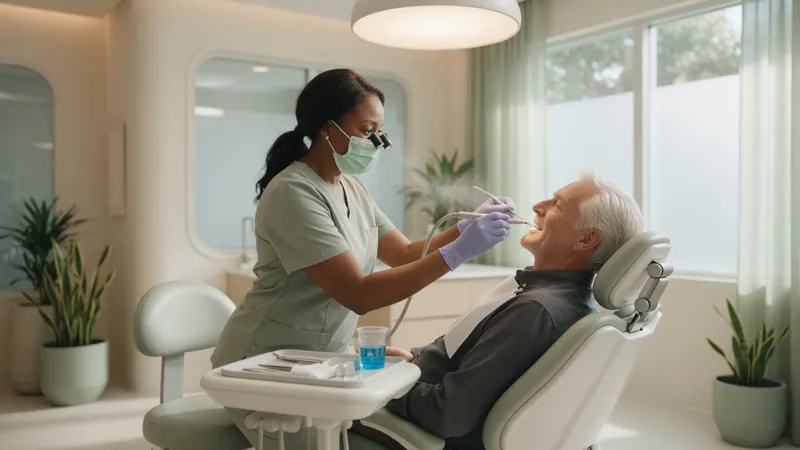
The difference in one minute
A regular cleaning (called a prophylaxis) is for people with healthy gums. It removes plaque and tartar from the visible parts of your teeth and just under the gum edge. A deep cleaning, called scaling and root planing, is a treatment for gum disease. It cleans below the gum line, down to the roots.
Put simply: a regular cleaning prevents problems. A deep cleaning treats one that has already started. Your dentist decides which one you need based on what they find in your mouth, not on how long it has been since your last visit.
Why does it matter? Because the wrong treatment wastes your time and money. A regular cleaning will not treat deep pockets, and a deep cleaning is more than healthy gums need. A careful exam is what tells them apart.
What happens in a regular cleaning
A regular cleaning is usually part of a checkup. It keeps healthy gums healthy and catches new problems early. Most people need no numbing, and the visit is usually comfortable.
Cleveland Clinic describes the usual steps:
- The hygienist checks your teeth and gums
- Plaque and tartar are scraped off with hand tools or an ultrasonic scaler (a tool that uses tiny vibrations and water)
- Your teeth are polished to remove stains and smooth the surface
- You floss, and the dentist checks your mouth
What happens in a deep cleaning
A deep cleaning treats the bacteria that have settled under the gums. Mouthhealthy.org, from the American Dental Association, explains that it has two parts:
Scaling. The dentist or hygienist removes plaque and tartar from above and below the gum line.
Root planing. The root surfaces are smoothed so the gums can heal and reattach to the teeth, and so bacteria have a harder time sticking again.
Because the work reaches below the gums, the area is usually numbed with a local anesthetic. According to Cleveland Clinic, the procedure takes one to two hours in total. It is often done in one visit or split into two, sometimes by sections of the mouth.
Afterward, your gums may be sore for a couple of days and your teeth may be sensitive to hot and cold. That sensitivity usually fades within a month or two. Most people go back to normal activities the same day.
Some offices use a laser or add an antibiotic as part of treatment. Whether these help depends on your case, and your dentist can explain the pros and cons. The core of treatment, mechanical removal of plaque and tartar, stays the same.
Many people ask if they can do a "deep cleaning" at home. You cannot. The tartar and bacteria sit below the gum line, where a brush and floss do not reach. Home care keeps results, but it does not replace the visit.
How your dentist decides
The decision rests on three things.
Pocket depth. The hygienist uses a small probe to measure the space between each tooth and the gum. Healthy pockets are about 1 to 3 millimeters. Pockets of about 4 millimeters or more suggest that bacteria have moved below the gum line.
Bleeding and swelling. Gums that bleed when probed point to active inflammation.
X-rays. They show whether there is bone loss around your teeth. Bone loss is the sign of periodontitis.
If your gums are healthy, you need a regular cleaning. If you have gingivitis (early, reversible gum inflammation), a thorough regular cleaning plus better home care is often enough. If you have periodontitis, a deep cleaning is the standard first treatment.
Your dentist may not decide on the spot. If your gums are very inflamed, a regular cleaning first can calm them down, and the real depth of disease shows up at the re-check. That is not wasted time. It gives a clearer picture.
Do I need a deep cleaning if it has been years?
Not always. Many people worry that a long gap means they need a deep cleaning. But the need comes from the state of your gums, not the number of years. If your gums are healthy, a longer regular cleaning may do the job. If your gums show disease, a deep cleaning treats it.
What a long gap does mean is that more tartar has built up and the gums may be inflamed. It is a good reason to book soon, rather than put it off again. The longer plaque and tartar stay, the more time bacteria have to damage the gums.
There is also a middle path. Some people have gingivitis plus a lot of heavy tartar. In that case, a longer cleaning, sometimes split over two visits, may be enough. A re-check a few weeks later shows whether the gums settled.
After a deep cleaning
Treatment is only the first step. After a deep cleaning, your dentist will schedule a follow-up to check how your gums healed and re-measure the pockets. Pockets that get smaller and gums that stop bleeding are signs that the treatment worked.
Then comes upkeep. Many people who had gum disease do best with cleanings every three to four months instead of twice a year. This is called periodontal maintenance. It keeps bacteria from taking hold again. Brushing twice a day and cleaning between your teeth every day matter even more now.
Tell your dentist if pain does not get better with over-the-counter medicine, if bleeding does not stop or if swelling gets worse after treatment.
Give yourself a week of extra care. Brush gently along the gum line, clean between your teeth and avoid smoking. If you take medicine for pain, follow your dentist's advice. Most people feel back to normal within days.
What a cleaning looks like at KDA
At Kendall Dental Associates, patients have an hour with our hygienists for routine cleanings. That time lets us measure your gums, take digital X-rays and clean carefully. If your gums show signs of disease, we explain what we see and recommend the right treatment, including periodontal care when it is needed. You will know what is planned and why before we start.
We want you to feel at ease. If dental visits make you nervous, tell us. We will go at your pace.
Call 305-271-1421 to book your visit. We are at 8833 SW 107th Ave in Miami, in the Kendall Mall, open Monday to Friday from 8:00 AM to 5:00 PM. Free parking is right outside. We accept most dental insurances and most Medicare supplemental plans, and financing is available. New patients can ask about a free X-ray, exam and consultation.
Common questions
Is a deep cleaning painful?
Your dentist numbs the area first, so you should not feel sharp pain. Your gums may feel sore for a couple of days after.
Can I go back to a regular cleaning after a deep cleaning?
Usually you move to a maintenance schedule, often every three to four months. Your dentist will tell you when and how often based on how your gums heal.
How long does a deep cleaning take?
Cleveland Clinic says it takes one to two hours in total. It may be done in one visit or split into two.
Do I need a deep cleaning if my gums do not hurt?
Possibly. Gum disease often causes no pain. The need depends on pocket depth, bleeding and bone level, which your dentist measures.
Is a deep cleaning the same as a whitening?
No. A deep cleaning treats gum disease. Whitening changes the color of the teeth. A cleaning may remove surface stains, but it is not a whitening treatment.
This article is general information, not medical advice. Your dentist will confirm what is right for you at your exam. General information checked against: my.clevelandclinic.org, mouthhealthy.org, my.clevelandclinic.org.