
Clean them like natural teeth, with a few extras
You clean dental implants the same way you clean natural teeth: brush twice a day, clean between them once a day and see your dentist and hygienist regularly. The implant itself cannot get a cavity. The gum and bone around it can still get infected if plaque is left there.
The extras are mostly about the tools. Some shapes, like a bridge on several implants, need a different tool to reach underneath.
Brushing: soft and thorough
Brush at least twice a day for two minutes with a soft-bristle brush. Hard bristles can scratch the crown and irritate the gum. An electric brush is a good choice if you like it, because it does a steady job.
Pay extra attention to where the crown meets the gum. Tilt the brush so the bristles touch the gum line, and use small, gentle circles. Do not scrub hard. You want to remove the sticky film, not wear the gum away.
Choose a toothpaste with fluoride that is not very gritty. Your dentist can suggest one if you have a ceramic crown or a full bridge.
The best tool is the one you will actually use every day. If floss is hard on your hands, try a floss holder or a water flosser. If your gums are tender, start gently and build up. A little bleeding in the first days of a new routine can happen when gums are inflamed, and it often settles in a week or so as they get healthier. If it keeps bleeding, tell your hygienist.
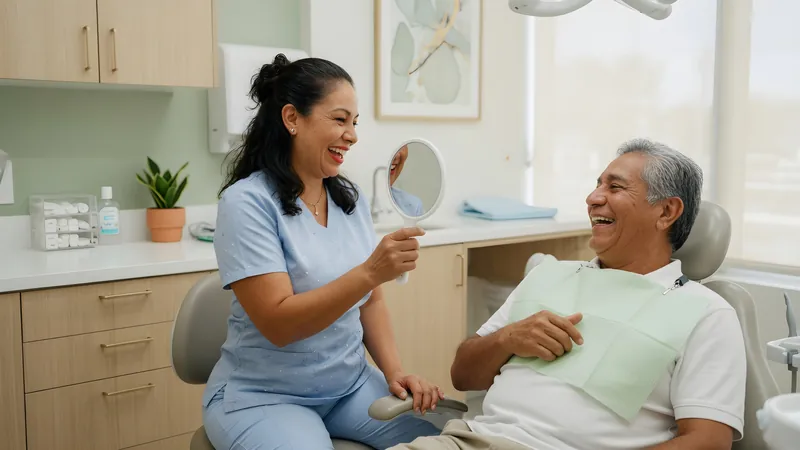
Ask for a quick lesson at your next visit. Showing you in your own mouth, with a mirror, makes more of a difference than any video.
Cleaning between and around the implant, single or bridge
This step matters most, and it is the one people skip. Plaque loves the spot where the implant meets the gum. Pick the tool that works for you:
Floss. Slide it down along the side and wrap it around the implant in a C shape. Do not snap it down into the gum; Small interdental brushes. These fit between an implant and the next tooth, and many people find them easier than floss; A water flosser. It sprays a stream of water along the gum line. It is a great help for bridges and people with arthritis; A floss threader or super floss. These help clean under a fixed bridge or a full-arch set of teeth.
A single implant with a crown cleans much like any other tooth. Floss or an interdental brush slides along each side, and the brush covers the front and back.
A fixed bridge on several implants is different. There is a stretch of false teeth that sits just above the gum, and food and plaque can hide underneath. You clean there with a floss threader, super floss, small brushes or a water flosser, ideally every day.
If you have a full set of fixed teeth, your hygienist will show you which tool suits your bridge. Ask for a demonstration and try it in the chair, so you know you can do it at home.
A simple daily routine
Keep it short and the same every day. This is a routine that works for most people:
- Morning: brush for two minutes, with attention at the gum line
- After meals: rinse with water, or with the rinse your dentist suggests
- Night: clean between the teeth and around the implants with floss, small brushes or a water flosser, then brush for two minutes
- If you grind your teeth: wear your night guard
- Every few months: look at your gums in a mirror for redness, swelling or bleeding
The first weeks after surgery
The rules are different right after surgery. For the first days, eat soft foods and avoid the implant area when you brush. Cleveland Clinic says that some soreness and swelling is normal for about a week, and store-bought pain relievers can help. Your dentist will tell you when to start rinsing and when you can brush the area again.
Please follow those directions, even if they differ from what you read online. Your surgery was one of a kind.
Free X-ray, exam and consultation. New Patient Special. New patients only.
The patient and any other person responsible for payment has the right to refuse to pay, cancel payment or be reimbursed for payment for any other service, examination or treatment that is performed as a result of and within 72 hours of responding to any advertisement for the free, discounted fee or reduced fee service, examination or treatment. D0191, C6182
Habits that protect your implants, and common mistakes
A few habits help them last. Skip chewing ice, hard candy, popcorn kernels and pens. Do not use your teeth to open packages. If you smoke or vape, quitting helps, since Cleveland Clinic notes that both can disrupt healing, and a large review found smokers have higher odds of implant failure.
If your mouth feels dry, drink water and ask about a dry-mouth rinse. A dry mouth makes plaque stick more. Cut back on sugary drinks that you sip all day, which feed the bacteria in plaque.
A few errors are easy to fix:
- Brushing hard with a stiff brush. Soft and gentle wins.
- Skipping the floss because the implant cannot get cavities. The gum still needs the cleaning.
- Using metal picks or sharp tools that can scratch the implant parts
- Using whitening toothpaste with strong grit on a crown
- Waiting for pain to book a visit. Gum infection can be painless at first.
Checkups: what we look for
Regular visits are part of implant care. A common schedule is a cleaning and exam about every six months, and your dentist may suggest more often if you have a history of gum disease. At these visits, the hygienist cleans around the implants with tools that are gentle on them. The dentist checks your gums, your bite and the X-rays to see the bone.
The mouthhealthy.org site from the American Dental Association also reminds patients that regular checkups and good hygiene are part of how implants last.
Call the office sooner if you see bleeding, swelling, pus, a bad taste or a loose feeling. These are early signs of infection, and early treatment works much better.
Implant care at KDA
At KDA, our hygienists spend a full hour with you at a routine cleaning. That gives them time to show you what tools fit your mouth and to check around each implant. Dr. Alfredo Calderon, who has over 15 years of experience with implants, plans the care.
Call 305-271-1421 to book. We are at 8833 SW 107th Ave in Kendall, open Monday to Friday, 8:00 AM to 5:00 PM, and emergency care is available 24/7. We accept most dental insurances and most Medicare supplemental plans, and financing is available.
Common questions
Can dental implants get cavities?
No. The implant itself cannot decay. The gum and bone around it can still get infected, and the natural teeth nearby can still get cavities.
Do I need a special toothbrush for implants?
A soft-bristle brush works. Many dentists like electric brushes. Small interdental brushes and a water flosser can help.
Can I use a water flosser with implants?
Yes, for most people. It is especially helpful for bridges. Ask your dentist which setting is right for you.
How often should I see the dentist with implants?
A common schedule is about every six months. Your dentist may want you more often if you have gum disease.
Should I use mouthwash?
It can help, but it does not replace cleaning between the teeth. Ask your dentist which rinse to use.
This article is general information, not medical advice. Your dentist will confirm what is right for you at your exam. General information checked against: my.clevelandclinic.org, mouthhealthy.org, dentalcare.com.