
The short answer: ask about care, cost and emergencies
Ask any new dentist three kinds of questions: how they care for patients, what it will cost and what happens in an emergency. Those three areas tell you almost everything about whether the office is right for you.
The American Dental Association (ADA) suggests calling or visiting more than one dentist before you choose. You do not need to ask all 15 questions below to every office. Pick the five that matter most to you, write them down and ask them the same way each time. Then you can compare the answers fairly.
Also pay attention to how you are answered. A good office is patient, direct and glad to be asked.
Questions about how they care for patients
Start with the human side. These questions show how the team works with you:
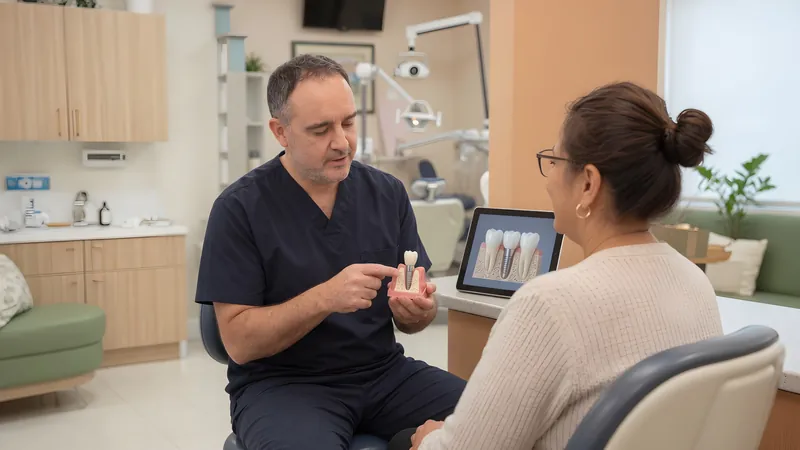
The first question matters most because it shows how a dentist thinks. A good one tells you what they found, shows you where, and explains what happens if you wait. You should leave knowing the reason behind each step, not only the next step.
It also helps to ask about the team, not only the dentist. Who does the cleaning? Who answers the phone? Who handles insurance? You will deal with all of them, and a kind, organized team makes every visit easier.
- How long is a typical checkup and cleaning? (Ours are an hour with a hygienist, which leaves time to talk.)
- Will I see the same dentist and hygienist each visit?
- How do you help patients who feel nervous?
- How do you explain a problem and the choices I have before you treat it?
- Can I get a second opinion without any hard feelings?
Questions about cost and payment
Nobody likes a surprise bill. Ask these before your first visit and again whenever you get a treatment plan:
These questions are not rude. Dentistry costs money, and every office knows it. Offices that are proud of how they handle billing will answer plainly. If someone gets defensive about a simple cost question, take note.
It also helps to ask what is usually included in a treatment price. For example, does the estimate for a crown include the temporary one? Do follow-up visits cost extra? Small details like these separate a clear estimate from a surprise.
- What does the first visit include, and what will it cost me?
- Can you give me a written estimate before any treatment?
- What payment options or financing do you offer?
- What is your policy if I need to cancel or move an appointment?
Questions about insurance
Insurance language can be confusing, so ask the office to explain it simply. First, ask whether the dentist is in your plan's network. In-network dentists have agreed to set rates with your insurer, which usually lowers what you pay. Out-of-network dentists can charge more, and your plan may pay a smaller share.
Next, ask the office to check your benefits. Two terms matter most. The annual maximum is the most your plan will pay in a year. After that, you pay the rest until the plan resets. Some plans also have waiting periods, which means you must wait before certain care, like crowns, is covered.
If you are on Medicare, ask about that too. Original Medicare does not cover routine dental care in most cases, according to Medicare.gov. Some Medicare Advantage and supplemental plans do cover some dental care, so it pays to ask exactly what your plan includes.
A good front desk will do the math with you. Ask, "If I need a crown, about how much will I pay after insurance?" The answer is an estimate, not a promise, because plans can change, but it should come with real numbers and not a shrug.
Questions about emergencies
Teeth do not break on a schedule. Ask what happens when something goes wrong, so you are not searching the internet at 2 AM with a swollen face.
Good questions are: Who do I call after hours? Do you see emergencies the same day? Is there a person on the other end of the line, or only a voicemail? Offices that plan for emergencies give you a clear number and a clear answer.
Ask about timing too. If you have a toothache on Saturday, is there someone to call? A swollen face or a knocked-out tooth cannot wait until Monday, and a good office makes sure you know that before it happens. Save the number in your phone when you book.
Questions about technology and X-rays
You do not need to be a tech expert. A simple question works: "What do you use to find problems early?" Many modern offices use digital X-rays, which use less radiation than old film, and some use 3D scans for planning bigger treatment.
Also ask how often you will get X-rays. The ADA says dentists should take X-rays only when needed to diagnose and treat. A good answer is "it depends on your risk and your history," followed by an explanation. You should not hear "everybody gets the same set every visit" without a reason.
If you may need an implant, crown or other bigger work, ask whether it is done in the office or sent elsewhere. Fewer handoffs usually mean faster care and fewer appointments.
Finally, ask how they keep your records. Digital records mean your X-rays and notes are easy to find and share with a specialist if you ever need one.
What good answers sound like
Good answers are specific. "We do cleanings in an hour, and we leave 10 minutes at the end for your questions" is better than "we take our time." "Call this number any time and we will see you the same day" is better than "we try to fit in emergencies."
Good answers admit limits too. If a dentist says, "That is a specialist's job, and here is who I trust," that is a sign of honesty, not weakness.
Watch for answers that dodge. If you ask about cost and hear only "we will work something out," ask again for numbers or a written estimate. If you ask about X-rays and hear only "it is our policy," ask why. You are allowed to understand your own care.
Cleveland Clinic says most adults should visit a dentist at least twice a year. So you are choosing someone you may see often. Pick a place where asking questions feels easy.
Take notes while you talk, or ask a friend to listen with you. After two or three calls, write one line about how each office made you feel. That one line is often the best predictor of whether you will stay.
You can also test an office with a small step first. Book a checkup and cleaning before agreeing to anything bigger. If the first visit goes well, you have a dentist. If not, you have lost very little.
How we answer these questions at Kendall Dental Associates
We have served Kendall since 1973, in the Kendall Mall at 8833 SW 107th Ave. Here are straight answers to the questions above.
Routine cleanings are an hour with one of our hygienists. We use digital X-rays and 3D scans. We accept most dental insurances and most Medicare supplemental plans, and financing is available. We take credit cards, debit cards and mobile payments. Our hours are Monday to Friday, 8:00 AM to 5:00 PM, and emergency care is available 24/7. Parking is free, and the entrance, restroom and parking are wheelchair accessible.
Call 305-271-1421 and ask us anything on this list. We are glad to be asked.
Free X-ray, exam and consultation. New Patient Special. New patients only.
The patient and any other person responsible for payment has the right to refuse to pay, cancel payment or be reimbursed for payment for any other service, examination or treatment that is performed as a result of and within 72 hours of responding to any advertisement for the free, discounted fee or reduced fee service, examination or treatment. D0191, C6182
Common questions
What is the most important question to ask a new dentist?
Ask how they explain your options before treating. A dentist who shows you the problem and lets you choose is usually a good fit.
Should I ask about price before my first visit?
Yes. Ask what the first visit includes and what you will pay. Ask for a written estimate before any treatment beyond the exam.
What does in-network mean?
In-network means the dentist has agreed to set rates with your insurer, which usually lowers what you pay. Out-of-network dentists may cost more.
What is an annual maximum?
It is the most your dental plan will pay in a year. After you reach it, you pay the rest until the plan resets.
How many dentists should I talk to before choosing?
The ADA suggests calling or visiting more than one. Two or three is a good number.
This article is general information, not medical advice. Your dentist will confirm what is right for you at your exam. General information checked against: mouthhealthy.org, humana.com, ameritas.com, my.clevelandclinic.org.