
What they are, in two sentences
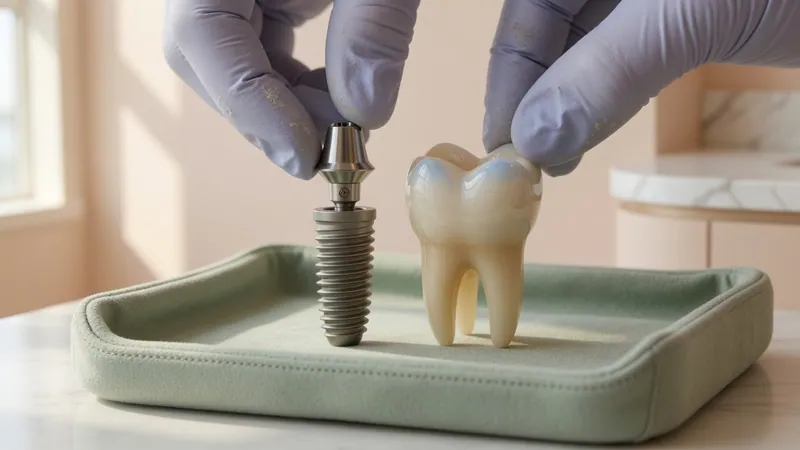
An implant-supported denture is a set of teeth that attaches to dental implants in your jawbone. The implants act like tooth roots, so the denture does not slide around on your gums.
Cleveland Clinic says implant-retained dentures are more stable than traditional dentures and do not need denture glue.
In simple terms, think of the implants as anchors. Instead of resting only on your gums, the denture is held by posts in your bone. That small change makes a big difference in how the denture feels when you chew, speak and smile.
These dentures are not new or experimental. Research on implant overdentures goes back decades, and they are a common choice for people who struggle with a loose lower denture.
If you have worn dentures for years, the idea of surgery may feel like a lot. That is a fair worry. Ask your dentist what the day looks like, what the numbing is like and how long you will need to rest.
The two main types
Which one is better? Neither wins for everyone. Snap-on is often easier to clean and costs less. Fixed feels more like natural teeth, because nothing comes out at night. Your bone, your budget and your hands all play a part. If you have trouble with your hands, for example from arthritis, daily cleaning of a fixed set may be harder, so say so at your visit.
Some people start with a snap-on denture because it is a simpler first step, and decide later whether to move to a fixed set. Ask whether your plan can be built in stages.
Cleveland Clinic notes that fixed dentures need more thorough daily cleaning, including flossing underneath.
There are two common styles. Both use implants. The difference is whether you can take the teeth out.
- Snap-on (removable): the denture snaps onto implants and comes out each night for cleaning. Dentists also call it an overdenture.
- Fixed (permanent): the teeth are attached to the implants and only a dentist can remove them. You clean them in place, including under the teeth.
Why people choose them
Most people who choose implant dentures want one thing: a denture that stays put. A regular denture can shift, wobble or slip when you talk or chew. That can make eating and laughing stressful.
The lower jaw is where many people have the most trouble with regular dentures, because the tongue moves the denture and there is less gum to hold on to. That is why implant overdentures are often talked about first for the lower jaw.
Success rates depend on your health, your bone and how well you clean the implants. No dentist can promise a result.
Here is what the research says:
- A review of implant overdentures found they are a predictable treatment with higher patient satisfaction, and they cost less than fixed options.
- A review in the Journal of the American Dental Association reported that implants in the front of the lower jaw have a success rate of better than 95 percent.
- Cleveland Clinic lists better chewing, appearance, speech and nutrition as benefits, plus help in slowing jawbone loss.
Who is a good candidate?
Age alone is not a reason to say no. Health matters more. If you have diabetes, take blood thinners or have had radiation to the head and neck, tell your dentist. Your dentist may want to talk with your doctor before planning surgery.
Implants need enough bone to hold them. If you do not have enough, a bone graft may be an option. A 3D scan shows how much bone you have, so we do not have to guess.
Not everyone is. A dentist looks at your jaws, gums and remaining teeth, and takes X-rays. Cleveland Clinic lists these factors:
- How many teeth are missing and for how long
- The thickness and density of your jawbone
- How your upper and lower jaws line up
- Whether you prefer a removable or fixed option
- Your health and your budget
What the steps look like
Timing differs from person to person. Healing can take months, and your plan depends on the number of implants, any graft you need and whether you wear a temporary denture in the meantime. Ask for a timeline for your case, and keep in mind that it may change as you heal.
Some soreness and swelling after surgery is normal. Call your dentist if pain gets worse instead of better, or if you have fever or heavy bleeding.
Each person's plan is different. In general, the process goes like this:
- Exam and 3D scan to check your bone and plan where each implant goes
- Implant placement, using a surgical guide made from your scan
- Healing, while the implant joins with the bone, which takes months
- A temporary denture or temporary teeth while you heal, when needed
- Your final snap-on or fixed teeth, then a bite adjustment
How they compare with regular dentures
Regular dentures sit on your gums only. They cost less at first, but they can move, and they need relines and new sets over time. Cleveland Clinic recommends a reline every 1 to 2 years and says dentures last 7 to 10 years on average.
Implant dentures cost more at the start. They are more stable, you may be able to chew more foods, and the implants help keep your bone from shrinking. Cleveland Clinic says implants can last a lifetime with proper care.
Also keep in mind that implants are minor surgery. They need healing time, careful cleaning and regular checkups. Smoking, diabetes that is not controlled and gum disease can raise the risk of problems. Tell your dentist about your health and medicines.
Cleaning is the biggest daily difference. With a snap-on denture, you take it out, brush it and soak it overnight, and you clean around the implants with a soft brush. With a fixed denture, you clean in place, including under the teeth. Cleveland Clinic says that takes more time and care.
Ask how long your results are likely to last, and what upkeep looks like. Parts such as the small snap-on attachments can wear and may need replacing over the years.
Questions to ask before you decide
Do not be shy about asking for a second opinion. This is a big decision. A dentist who is sure of the plan will be happy to explain it.
A good answer is specific to your mouth, not a general sales pitch.
Take these to your appointment:
- Which type is best for me, snap-on or fixed?
- How many implants do I need?
- Do I have enough bone, or will I need a graft?
- What will I wear while I heal?
- What is the full cost, including the final teeth and follow-up visits?
- How do I clean it every day?
Implant dentures at Kendall Dental Associates
At KDA, we make full sets of fixed teeth on implants. We plan with a CBCT 3D scan taken in our office and place implants with surgical guides made from your scan measurements. Dr. Alfredo Calderon has over 15 years of experience in implants, both surgical and prosthetic.
If you wear a loose denture today and wonder if implants could help, call 305-271-1421 for a free implant evaluation. We are at 8833 SW 107th Ave, Miami, in the Kendall Mall, open Monday to Friday, 8:00 AM to 5:00 PM.
Financing is available, and we accept most dental insurances and most Medicare supplemental plans.
Dr. Calderon also served as a courtesy clinical professor for the University of Florida residency program. Our office also takes digital impressions with an intraoral scanner, so there is no tray of impression material in your mouth.
Common questions
Are implant-supported dentures permanent?
Some are. Fixed versions can only be removed by a dentist. Snap-on versions come out for cleaning each day.
How many implants do I need for a denture?
It depends on the type, the jaw and your bone. Your dentist plans the number from your exam and 3D scan.
Can I get implants if I have worn dentures for years?
Often yes, if you have enough healthy bone. If you do not, a bone graft may help. A scan will show your options.
Do I still need to take care of them?
Yes. You clean them daily and see your dentist regularly. Good cleaning is a key part of how long implants last.
Are implant dentures covered by insurance?
Coverage varies a lot. Original Medicare generally does not cover dental care. Call us with your plan and we can help you look at it.
This article is general information, not medical advice. Your dentist will confirm what is right for you at your exam. General information checked against: my.clevelandclinic.org, ncbi.nlm.nih.gov, pubmed.ncbi.nlm.nih.gov.